Cardiac arrest, Cardiac arrest symptoms, Cardiac arrest causes, Cardiac arrest treatment, Signs of cardiac arrest
Cardiac Arrest Symptoms, Causes, Treatment, and Warning Signs You Should Know
Cardiac arrest is a life-threatening medical emergency that happens when the heart suddenly stops pumping blood effectively to the body. Understanding cardiac arrest, including its warning signs, possible causes, and treatment, can help people respond quickly when every second matters.
Unlike many health conditions that develop gradually, cardiac arrest can occur suddenly and with little or no warning. When the heart can no longer pump blood, the brain and other organs are deprived of oxygen. Without immediate medical attention, cardiac arrest can become fatal within minutes. Cleveland Clinic Abu Dhabi emphasizes that rapid emergency care, cardiopulmonary resuscitation (CPR), and defibrillation can significantly improve the chances of survival.
Cleveland Clinic Abu Dhabi: Cardiac Arrest health resource
Key Takeaways
- Cardiac arrest occurs when the heart stops beating effectively or beats so rapidly that it cannot pump blood.
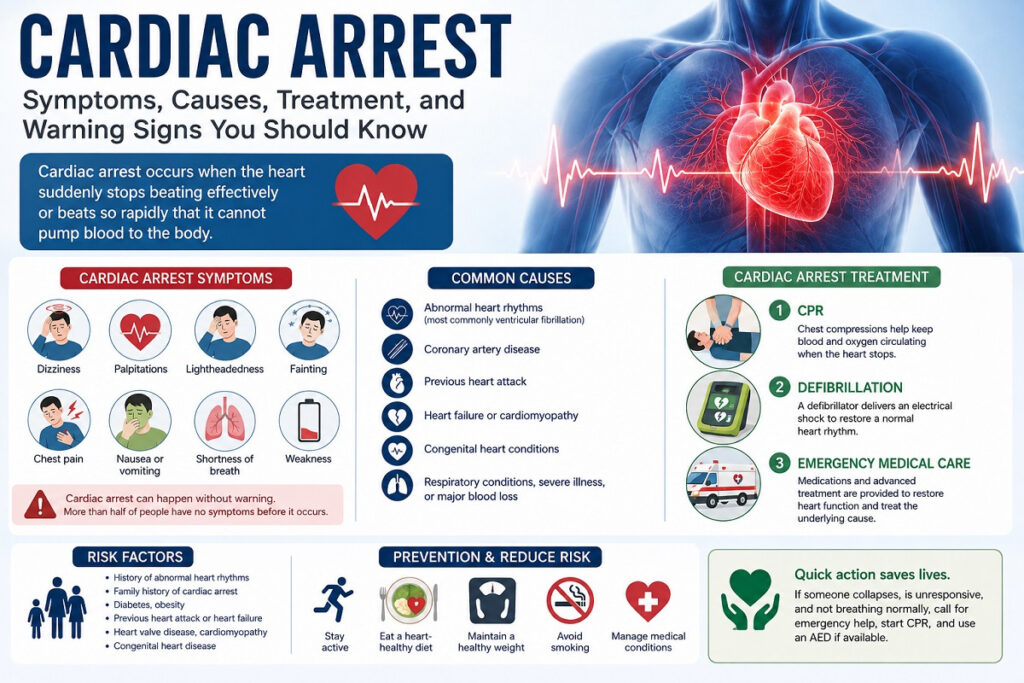
- Cardiac arrest symptoms can include dizziness, palpitations, lightheadedness, fainting, chest pain, nausea, shortness of breath, and weakness.
- Some people have no warning signs of cardiac arrest before losing consciousness.
- Most cases are linked to abnormal heart rhythms, particularly ventricular fibrillation.
- Immediate CPR and defibrillation are critical parts of cardiac arrest treatment.
- Heart disease, previous heart attack, certain inherited conditions, diabetes, obesity, and a history of abnormal heart rhythms can increase risk.
- Cardiac screening and healthy lifestyle choices may help identify and reduce some risk factors.
What Is Cardiac Arrest?
Cardiac arrest occurs when the heart suddenly stops beating normally or beats so quickly that it can no longer pump blood effectively. The problem is usually associated with the heart’s electrical system, which controls the heartbeat.
When the heart stops circulating blood, oxygen cannot reach vital organs. The brain is particularly sensitive to a lack of oxygen, which is why a person can quickly lose consciousness during cardiac arrest. Immediate action is essential because the condition can become fatal within minutes.
Cardiac arrest can affect older adults, younger people, and even individuals who have never been diagnosed with heart disease. However, people with a previous heart condition or heart attack may have a higher risk.
It is also important to understand that cardiac arrest is not the same as a heart attack. A heart attack generally occurs when blood flow through one or more coronary arteries becomes blocked. Cardiac arrest, on the other hand, involves an electrical problem that prevents the heart from pumping blood properly. A heart attack can sometimes trigger cardiac arrest, but the two conditions are different.
Cardiac Arrest Symptoms
Recognizing cardiac arrest symptoms can be difficult because the condition often develops suddenly. Some people experience warning symptoms shortly before losing consciousness, while others have no noticeable symptoms at all.
According to Cleveland Clinic Abu Dhabi, possible warning symptoms include:
- Dizziness
- Heart palpitations
- Lightheadedness
- Fainting or loss of consciousness
- Chest pain
- Nausea or vomiting
- Shortness of breath
- Weakness
These symptoms do not necessarily mean that cardiac arrest is occurring. They can also be associated with other heart or medical conditions. However, sudden or severe symptoms should never be ignored.
Signs of Cardiac Arrest During an Emergency
Once cardiac arrest occurs, the most important signs of cardiac arrest are loss of consciousness, absence of normal breathing, and the absence of a pulse. Cleveland Clinic Abu Dhabi notes that a person who has lost consciousness, has no pulse, and is not breathing may be experiencing cardiac arrest and needs urgent medical assistance.
If someone suddenly collapses and does not respond, treat the situation as an emergency. Call for emergency medical assistance and begin CPR as appropriate. If an automated external defibrillator (AED) is available, it should be used according to its instructions.
Can Cardiac Arrest Happen Without Warning?
Yes. One of the most important facts about cardiac arrest is that it may occur without obvious warning symptoms.
Some individuals may notice dizziness or a racing heartbeat before an event, but others collapse unexpectedly. Cleveland Clinic Abu Dhabi reports that cardiac arrest can happen without symptoms immediately beforehand. Its related resource on sudden cardiac arrest also notes that more than half of people experiencing sudden cardiac arrest may have no warning symptoms.
This is why knowing basic CPR and understanding how to use an AED can be valuable, particularly for family members of people with known heart conditions or other risk factors.
Cardiac Arrest Causes
Understanding cardiac arrest causes begins with the heart’s electrical system. The heart relies on carefully coordinated electrical signals to maintain a regular rhythm. When abnormal electrical impulses override the normal rhythm, a dangerous arrhythmia can develop.
Most cardiac arrests are associated with abnormal heart rhythms called arrhythmias. One of the most serious is ventricular fibrillation, often called V-fib. During ventricular fibrillation, the electrical activity in the heart’s ventricles becomes chaotic. Instead of contracting effectively, the ventricles quiver, preventing the heart from pumping enough blood to the body.
Several medical conditions may contribute to the development of dangerous rhythms. These include:
Coronary Artery Disease
Coronary artery disease can affect blood flow to the heart and is an important underlying cardiovascular condition associated with cardiac arrest.
Previous Heart Attack
A previous heart attack can damage heart tissue and increase the risk of dangerous electrical abnormalities.
Cardiomyopathy
Cardiomyopathy refers to diseases affecting the heart muscle. Changes in the heart muscle can interfere with its ability to pump blood and maintain a normal rhythm.
Heart Failure
Heart failure can weaken the heart’s pumping ability and increase vulnerability to potentially dangerous arrhythmias.
Congenital Heart Conditions
Some people are born with structural or electrical abnormalities of the heart that can increase their risk.
Respiratory Conditions and Severe Illness
Respiratory problems, infectious diseases, and severe injury or illness involving major blood loss can also contribute to circumstances associated with cardiac arrest.
Who Is at Higher Risk of Cardiac Arrest?
Having a risk factor does not mean that a person will definitely experience cardiac arrest. However, recognizing personal risk factors can help people discuss appropriate screening and prevention strategies with a healthcare professional.
Cleveland Clinic Abu Dhabi identifies several factors that may increase the risk, including:
- A history of abnormal heart rhythms
- A family history of cardiac arrest
- Previous cardiac arrest
- Congenital heart disease
- Diabetes
- Previous heart attacks
- Heart failure
- Heart valve disease
- Hypertrophic cardiomyopathy
- Obesity
Family history deserves particular attention. Certain heart rhythm disorders and inherited cardiac conditions can run in families. People who have a close relative with sudden cardiac arrest or an unexplained cardiac death should discuss their family history with a doctor.
Cardiac Arrest Treatment
Cardiac arrest treatment must begin immediately. The goal is to restore effective circulation and a normal heart rhythm while preventing damage to the brain and other organs.
1. CPR
CPR helps keep blood and oxygen circulating when the heart is no longer pumping effectively. Chest compressions can provide temporary circulation until professional medical help arrives or the heart’s normal rhythm is restored.
Cleveland Clinic Abu Dhabi stresses that rapid CPR can be lifesaving. Brain damage can begin within minutes when the brain does not receive enough oxygen, making immediate action extremely important.
2. Defibrillation
Defibrillation is another critical component of emergency treatment. A defibrillator delivers an electrical shock to the heart with the aim of restoring a normal rhythm.
An AED may be available in public places and other settings. When used appropriately, it can provide an important chance of restoring a rhythm that can support effective circulation.
3. Emergency Medical Treatment
Once emergency medical professionals arrive, they can provide advanced resuscitation and defibrillation when indicated. Medications may also be administered intravenously to help restore or maintain the heart’s normal electrical rhythm.
After successful resuscitation, further hospital care is generally required. Doctors need to determine why the cardiac arrest occurred and identify ways to reduce the risk of another event.
How Is Cardiac Arrest Diagnosed?
Cardiac arrest is primarily recognized during the emergency itself. Because the condition progresses rapidly, waiting for extensive diagnostic testing before starting treatment can be dangerous.
A person who suddenly becomes unconscious and is not breathing normally may be experiencing cardiac arrest. Immediate emergency response is therefore more important than delaying care for diagnostic confirmation.
After the person has been stabilized, doctors can investigate the underlying cause. Depending on the patient’s circumstances, cardiac evaluation may include an electrocardiogram, echocardiogram, ambulatory monitoring, blood tests, cardiac catheterization, electrophysiology testing, or cardiac MRI.
Can Cardiac Arrest Be Prevented?
Not every case can be prevented, particularly when an unexpected electrical or inherited heart problem is involved. However, identifying risk factors and managing underlying heart conditions may reduce the risk.
Cleveland Clinic Abu Dhabi recommends cardiac screening for identifying potential risk factors. Screening may be especially relevant for people with known cardiovascular disease, significant risk factors, or certain family histories.
For people at increased risk, doctors may recommend treatments such as an implantable cardioverter-defibrillator (ICD), beta-blockers or other medications, arrhythmia treatment, angioplasty, or coronary artery bypass surgery, depending on the underlying condition.
Lifestyle choices can also support overall heart health. Recommended measures include:
- Staying physically active
- Following a heart-healthy diet
- Maintaining a healthy weight
- Avoiding smoking
- Managing existing medical conditions with appropriate medical care
What Happens After Cardiac Arrest?
Surviving cardiac arrest is only the first stage of recovery. Because the brain and other organs can be affected by a period of reduced oxygen supply, some survivors experience longer-term complications.
Possible complications described by Cleveland Clinic Abu Dhabi include cognitive difficulties, sensory problems, mental health concerns, muscle weakness, and paralysis.
Recovery varies considerably from person to person. Follow-up care focuses not only on physical recovery but also on identifying and treating the condition that caused the cardiac arrest.
When Should You Seek Emergency Help?
Cardiac arrest requires immediate emergency medical attention. If someone suddenly collapses, becomes unresponsive, and is not breathing normally, do not wait for symptoms to improve.
Seek emergency assistance immediately, begin CPR when appropriate, and use an AED if one is available. Early intervention can make a major difference because the chances of survival decrease as effective treatment is delayed.
Even when someone experiences possible warning symptoms such as unexplained fainting, severe chest discomfort, sudden shortness of breath, or unusual heart palpitations, prompt medical evaluation is important, particularly when symptoms are sudden or severe.
Cardiac arrest is one of the most serious medical emergencies because it can stop effective blood circulation within seconds. The condition may affect people with known heart disease as well as those without a previous diagnosis.
Knowing the cardiac arrest symptoms and signs of cardiac arrest can help people recognize an emergency quickly. Understanding the major cardiac arrest causes can also encourage appropriate screening and management of cardiovascular risk factors.
Most importantly, cardiac arrest treatment cannot wait. CPR and rapid defibrillation are central to the emergency response, while hospital evaluation helps identify the underlying problem and reduce the risk of future events.
This information is for general education and does not replace advice from a qualified healthcare professional. If you believe someone is experiencing cardiac arrest, seek emergency medical help immediately.
Cardiac arrest symptoms